


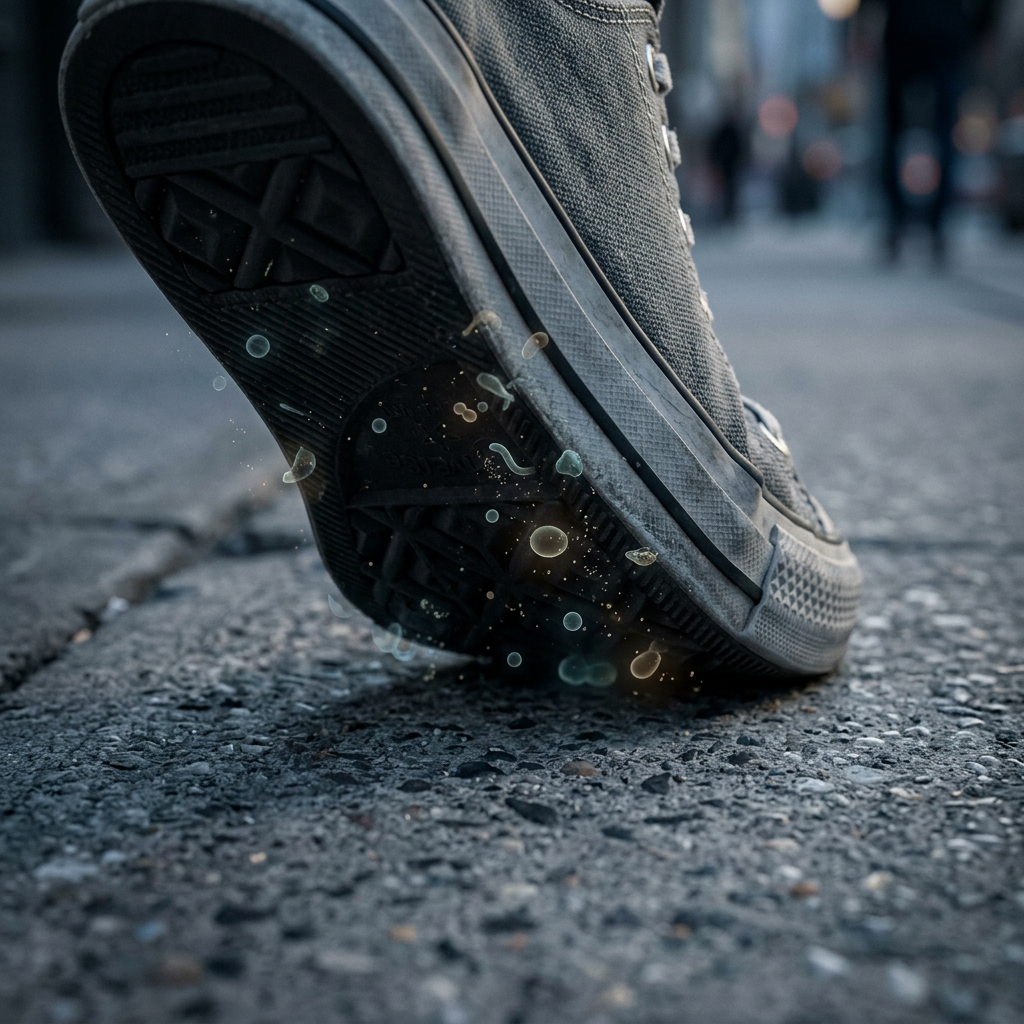
What Shoes Pick Up Along the Way
Every step exposes footwear to microscopic particles left behind by thousands of people.
These can include:
- Bacteria from public surfaces
- Fungal organisms from shared environments
- Environmental pollutants
- Organic debris from the ground
Over time, these contaminants accumulate on the exterior and within the materials of shoes.
But what happens inside the shoe is often even more important.
A Perfect Environment for Microbial Growth
During daily wear, shoes trap three conditions that microorganisms thrive in: heat from body temperature, moisture from perspiration, and limited airflow inside the shoe. Together these factors create an environment where bacteria and fungi can grow between uses. Over time, this buildup can lead to persistent odor, microbial accumulation, reduced material lifespan, and a less hygienic environment for the feet. Most people never see what is happening inside their shoes, but the effects eventually become noticeable.
What Research Shows About Footwear
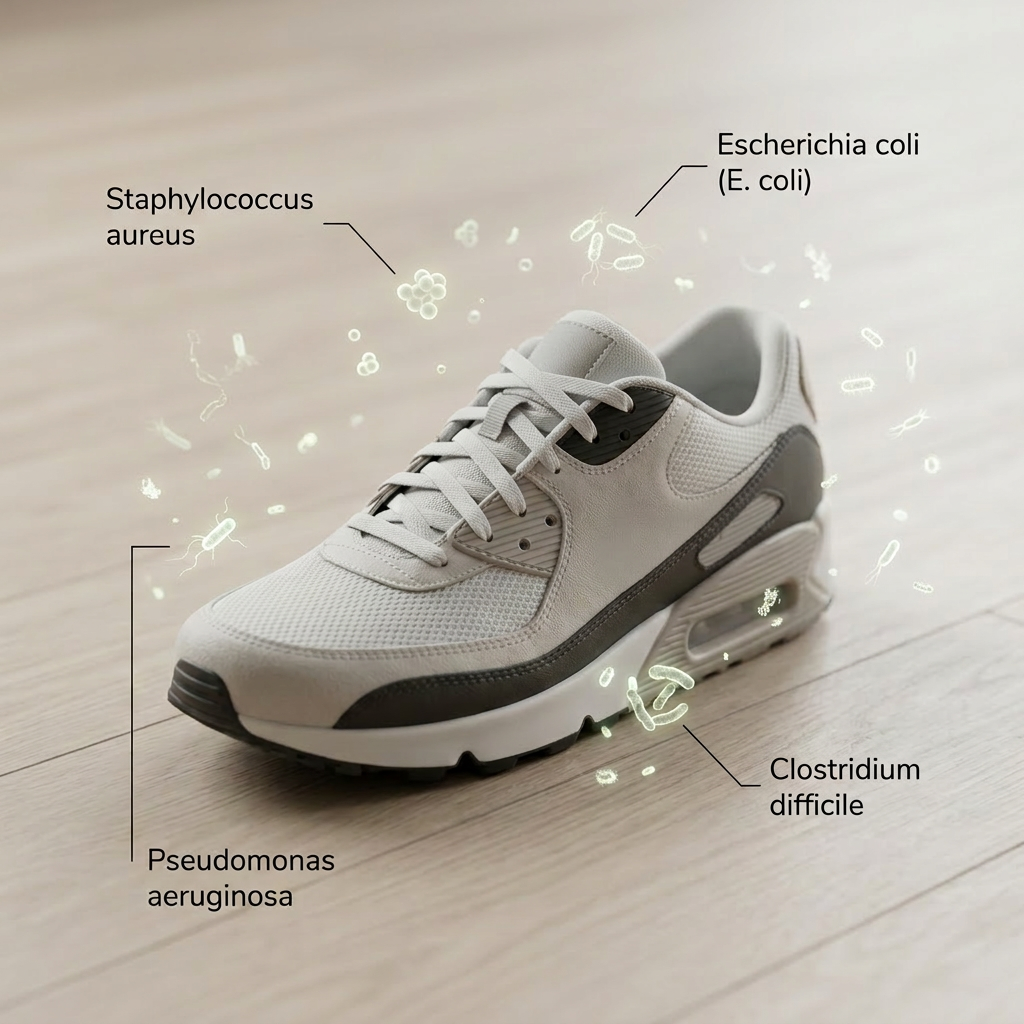
Studies examining everyday footwear have found that shoes can carry a variety of microorganisms collected from the environments we walk through daily — even when they appear visibly clean. Many contaminants are microscopic and accumulate long before shoes show any visible signs of dirt.
Some of the bacteria detected on footwear include:
- Staphylococcus aureus
- Escherichia coli (E. coli)
- Pseudomonas aeruginosa
- Clostridium difficile
Many of these microorganisms originate from high-traffic environments and organic waste found on public surfaces. Once attached to shoes, they can easily be transported between outdoor environments and indoor spaces.
This is one reason footwear is often considered a major carrier of environmental contaminants.
Why Most Shoe Cleaning Methods Fall Short
Many people attempt to clean shoes when they become dirty or develop odor. But most common approaches come with trade-offs that make regular care difficult.
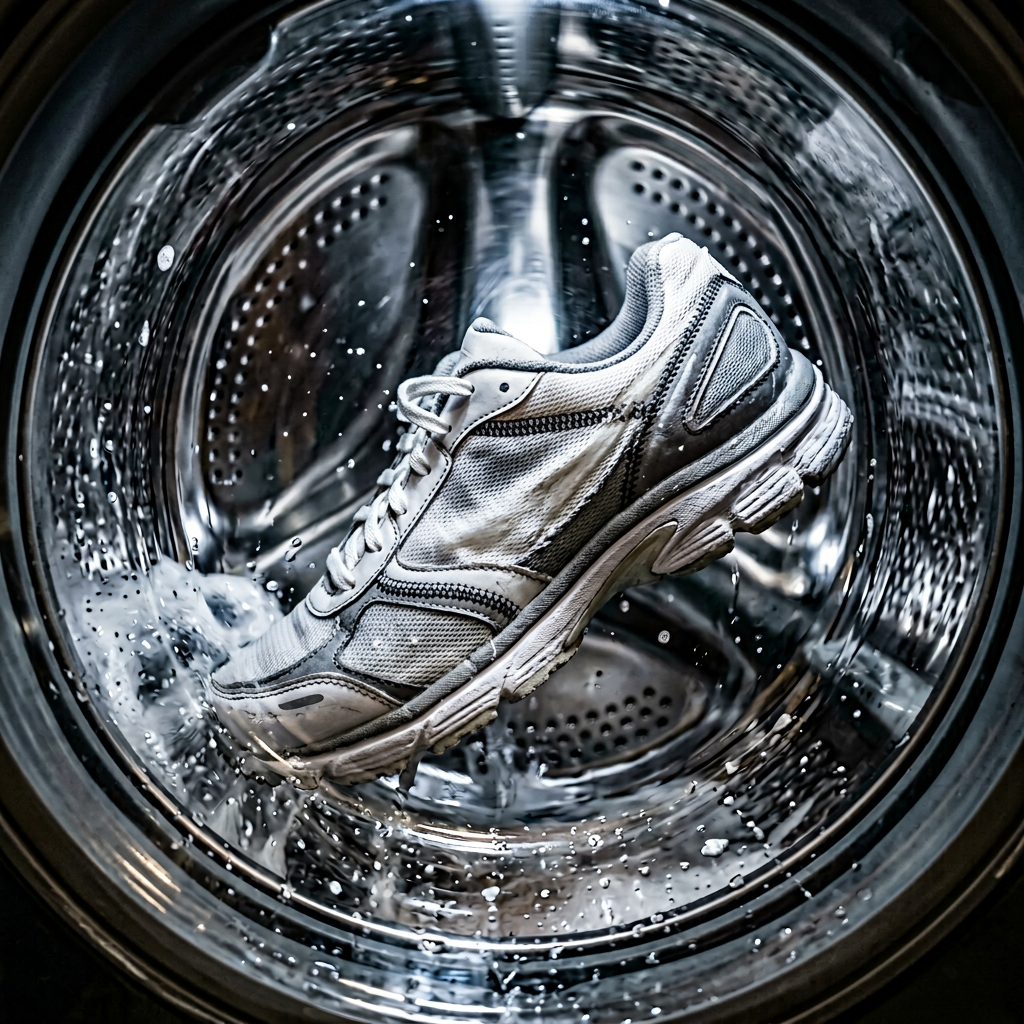
Washing Machines
Washing machines expose footwear to water saturation, mechanical agitation, and heat. While this may remove surface dirt, it can weaken adhesives, distort structure, and shorten the lifespan of many materials — particularly leather, suede, and premium sneakers.
Because of these risks, most shoes aren’t washed regularly.
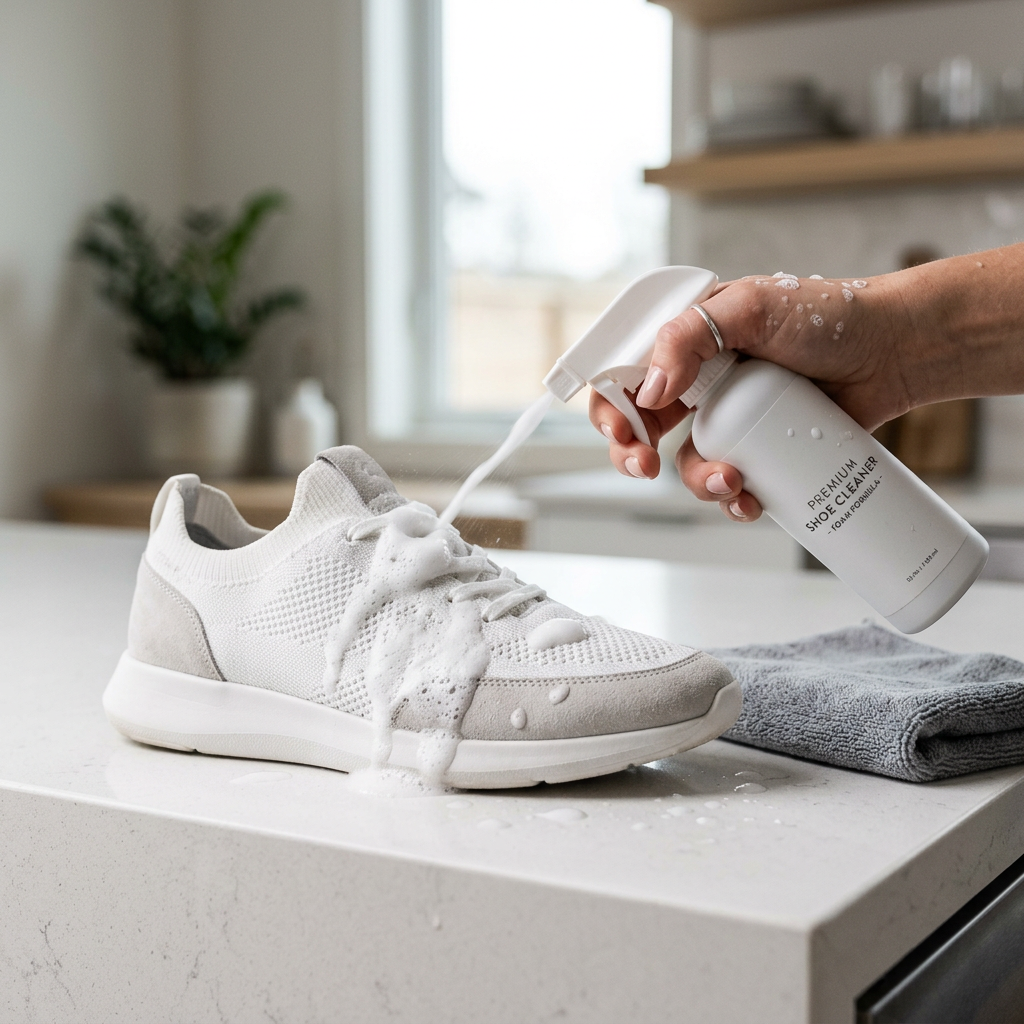
Sprays and Spot Cleaning
Deodorizing sprays and cleaning solutions are often used to treat odor or visible stains. While they may provide temporary relief, they typically mask smells rather than addressing the underlying environment inside the shoe.
Hand cleaning can also be time-consuming and inconsistent, making it impractical as a routine habit.
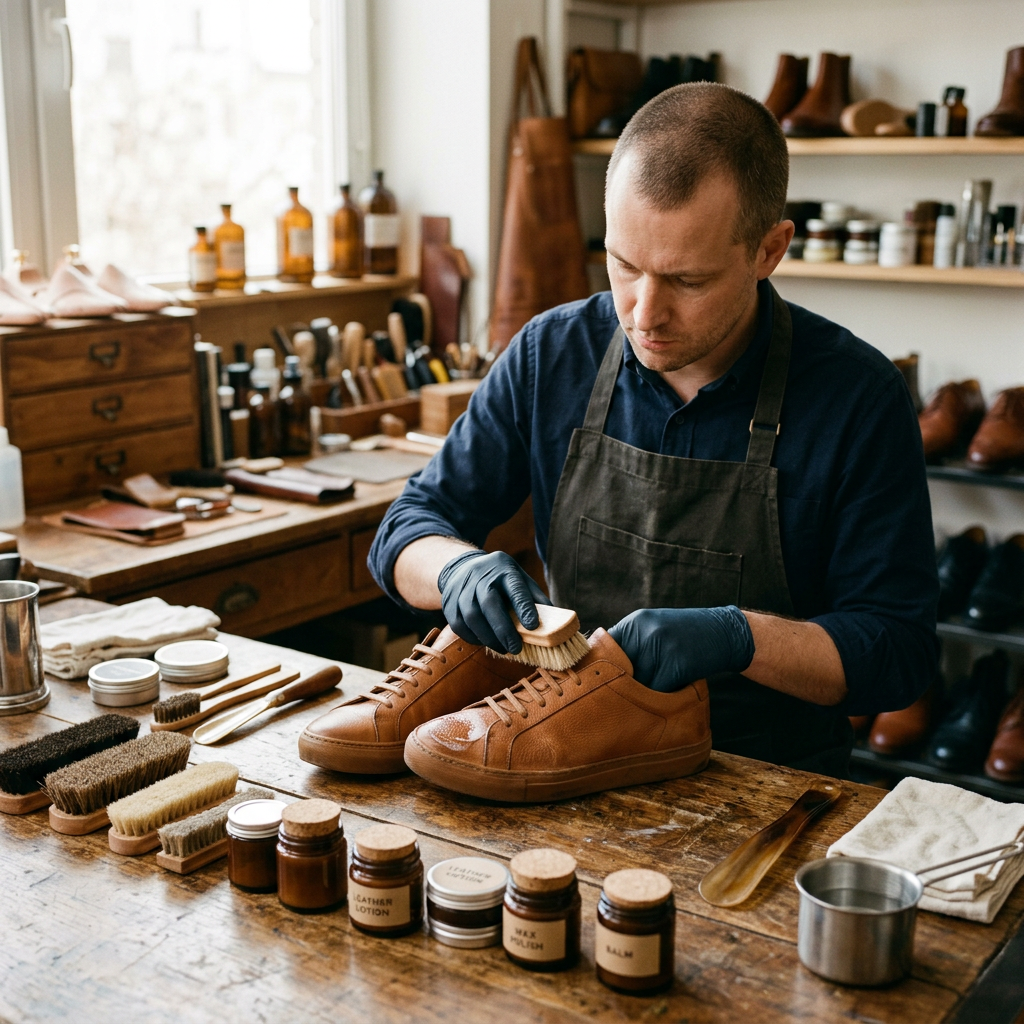
Professional Shoe Cleaning
Professional shoe cleaning services can restore heavily worn footwear, but they are often expensive and designed for occasional deep cleaning rather than everyday care.
As a result, most shoes are simply worn again between uses.
Because of these limitations, many shoes are worn repeatedly without being properly refreshed between uses, allowing moisture, microbes, and environmental contaminants to accumulate over time.

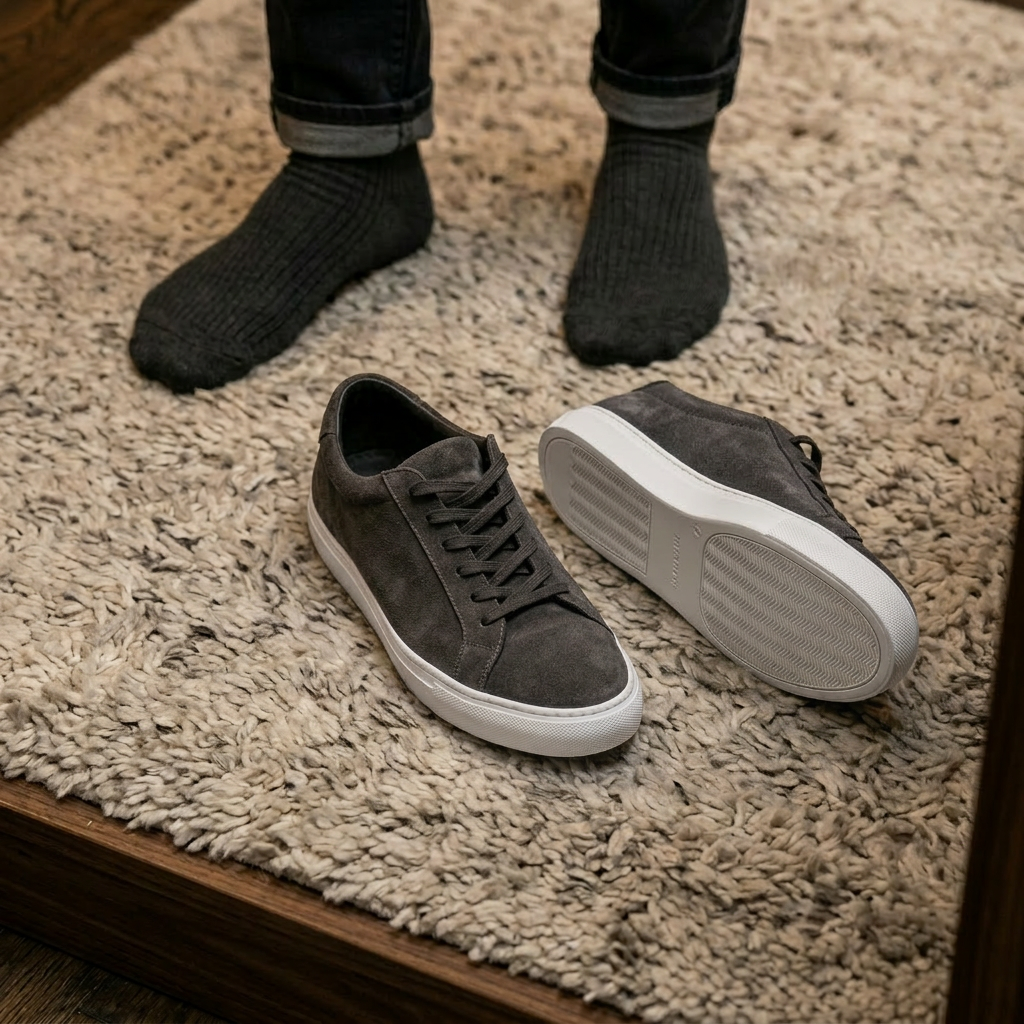
Care Between Wears
The Missing Step
Clothing is washed between uses.
Garments are hung or steamed after being worn.
But footwear — despite enduring constant exposure — rarely receives attention between wears.
This gap is where most footwear deterioration begins.
Maintaining shoes regularly helps preserve both hygiene and the structure of the materials.

Introducing a Footwear Care Ritual
Shoe Steamer is designed to introduce a new standard of footwear care.
Instead of waiting until shoes become visibly dirty or damaged, it refreshes footwear between wears using controlled steam cycles.
This process helps:
- Reduce moisture inside the shoe
- Limit microbial buildup
- Maintain the internal environment of footwear
- Preserve materials over time
Rather than aggressive cleaning, it focuses on thoughtful maintenance.