


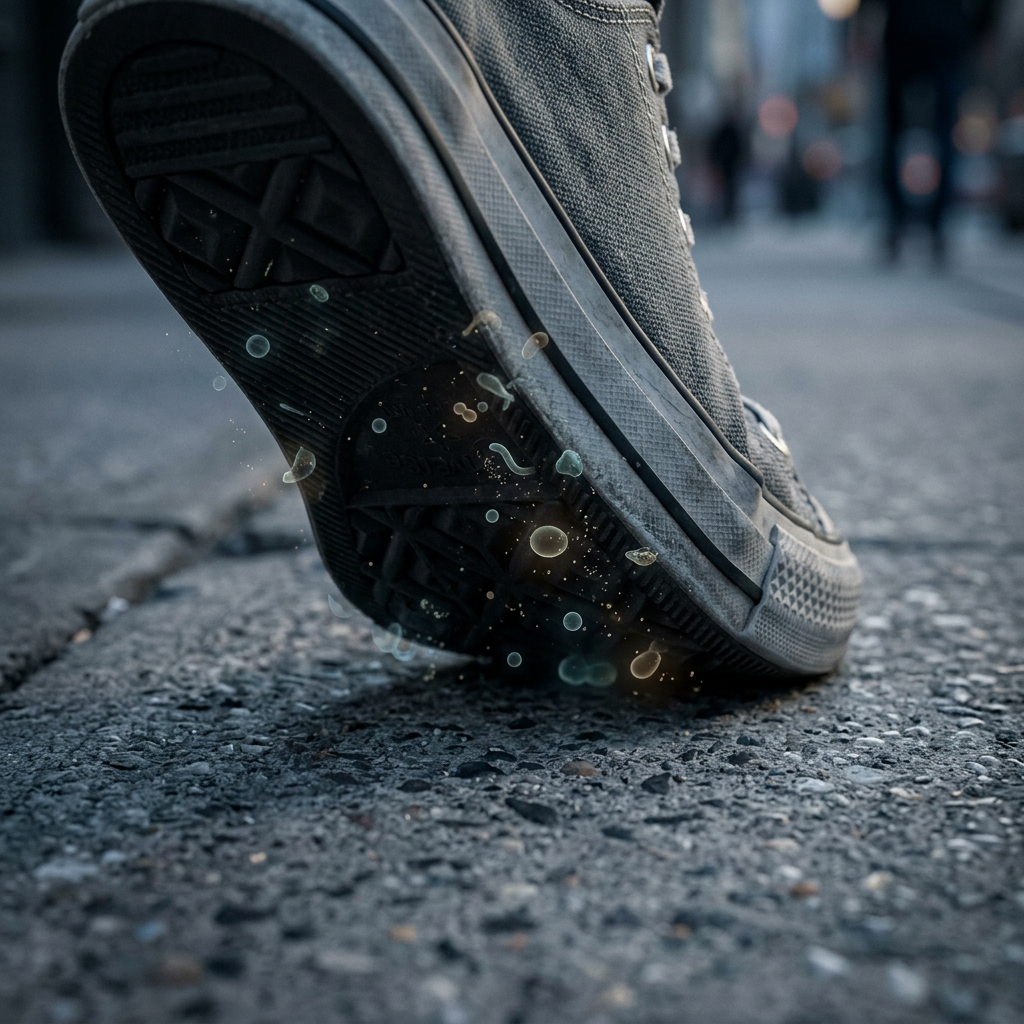
Where Shoes Pick Up Bacteria
Every day, footwear travels through environments filled with microscopic organisms.
- Sidewalks.
- Airports.
- Hospitals.
- Public transportation.
- Restaurants and restrooms.
These surfaces collect bacteria from thousands of people throughout the day. As we walk across them, microorganisms attach to the soles and materials of shoes.
By the time you return home, footwear may be carrying far more than visible dirt.
Related Reading
Common Bacteria Found on Footwear
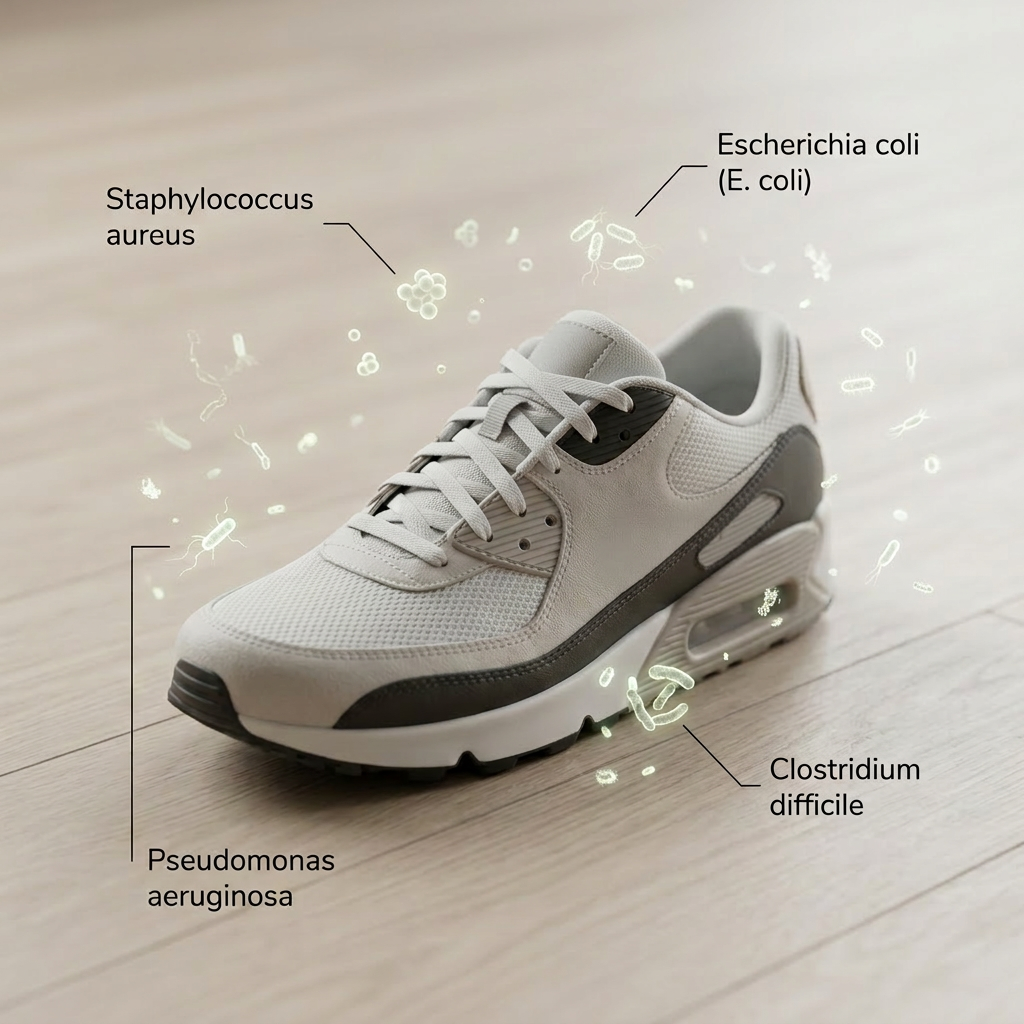
Research examining everyday shoes has identified a variety of microorganisms commonly found on footwear. Some of the most frequently detected include:
Staphylococcus aureus - A bacterium associated with skin infections and commonly found on public surfaces.
Escherichia coli (E. coli) - Often associated with contaminated environments and frequently detected on shoe soles.
Pseudomonas aeruginosa - Thrives in moist environments and can contribute to odor and infection.
Clostridium difficile - A resilient bacterium capable of surviving on surfaces for extended periods.
Why Shoes Become a Breeding Ground
Inside most footwear, conditions naturally support microbial growth. Heat from body temperature, moisture from perspiration, limited airflow, organic material from skin cells Together these conditions create an environment where bacteria can multiply between wears.
Why Traditional Cleaning Falls Short
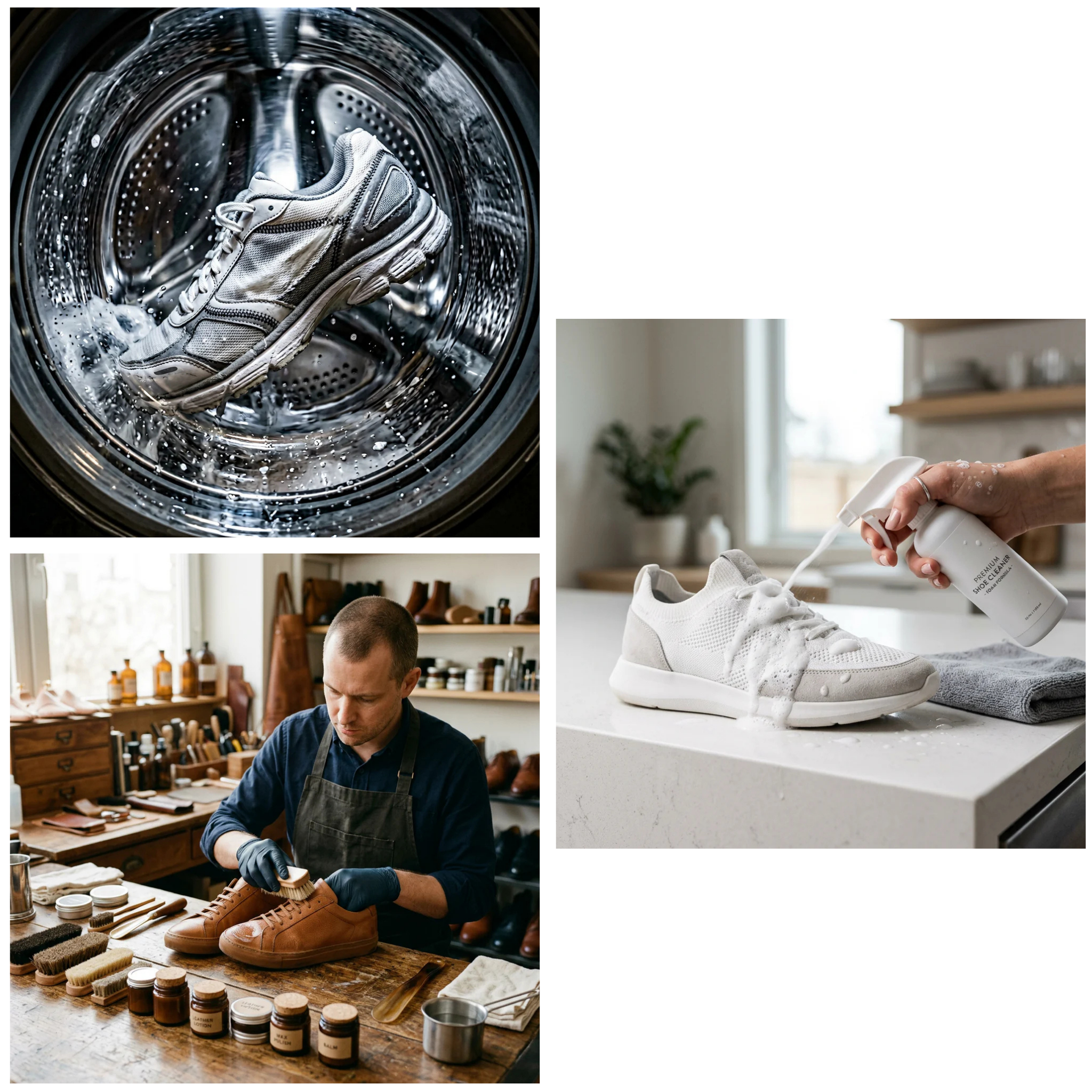
Many people attempt to address this problem by washing shoes or using sprays.
However:
- Washing machines can damage adhesives and materials
- Chemical sprays often mask odor instead of removing bacteria
- Shoes are frequently worn again before they fully dry
Over time, microbes and moisture continue to accumulate.
Related Reading
A Better Approach
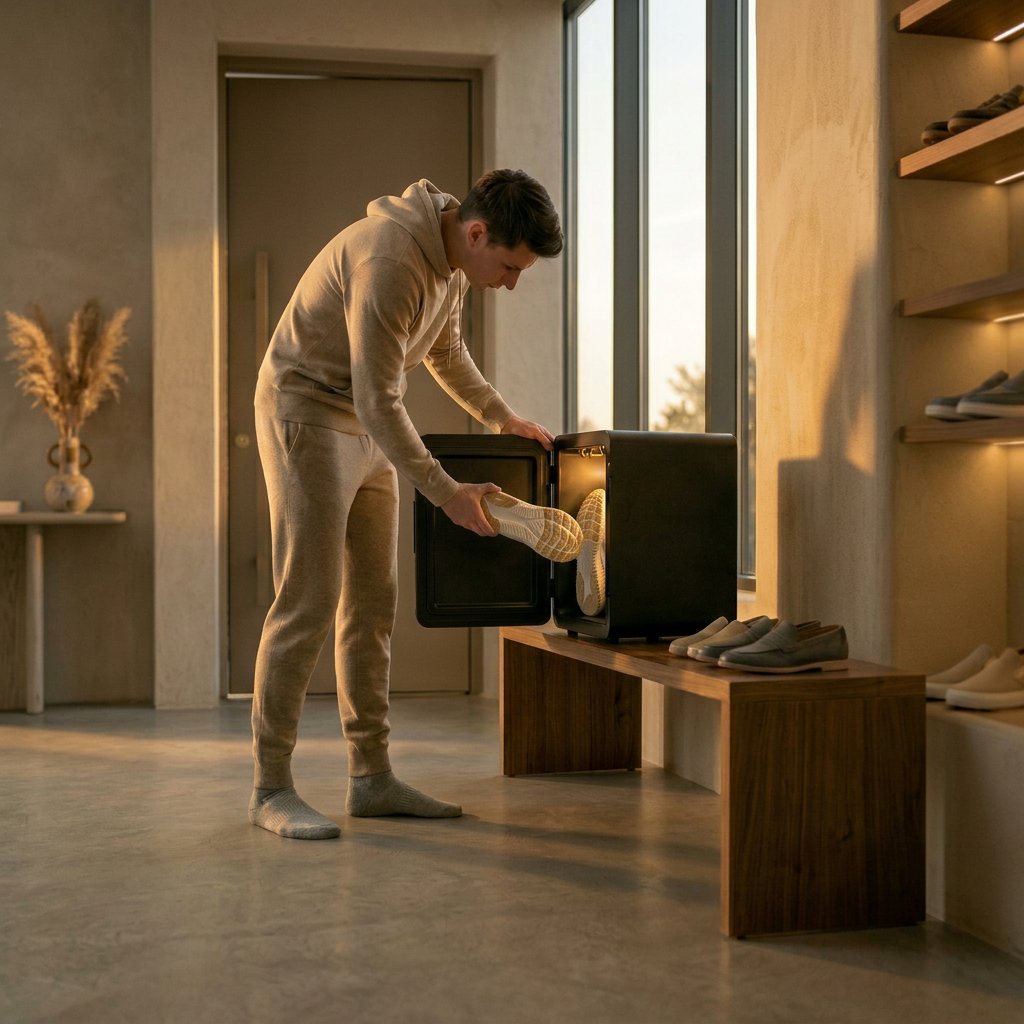
Steam has long been used in healthcare and textile care because of its ability to penetrate surfaces and neutralize microorganisms. Shoe Steamer applies this concept to footwear.
Controlled steam cycles help:
- reduce bacterial buildup
- eliminate odor at its source
- remove moisture
- preserve delicate materials
This allows footwear to be refreshed between wears without harsh washing methods.
Explore More

Protect Your Home From Bacteria